PMI-CP vs. PMP: Which Certification Is Right For You?
Almost every construction project encounters some kind of issue: delays, cost overruns, and miscommunications. Or even worse? The resource crunches. Even highly-experienced project managers face these challenges. Hence, it's easy for stakeholders to question whether you can consistently deliver under pressure.
That's why certifications like PMI-CP and PMP matter: they're a clear signal that you know how to handle complex projects, manage risks, and keep teams on track. These days, many construction companies now list preferences for (CCMs) on their teams in RFPs and RFQs, making certification almost a necessity.
In fact, numbers back it up too. According to a report, the global economy will need approximately 30 million new project professionals by 2030, driven by growth in project-oriented sectors like construction.
But which certification is right for you, PMI-CP or PMP? That’s exactly what we’ll break down in this article.
Why Project Management Certification is Essential in Construction
Modern construction projects no longer depend on building schedules. They involve managing a complex web of contracts, regulatory compliance, and digital construction technologies. Plus, the usage of Artificial Intelligence in the construction sector has added another layer of complexity to construction projects. As of early 2024, 32% of construction professionals use AI in their projects, with another 43% planning to adopt it. A single misstep in any of these areas can trigger costly delays. Eventually, it can erode client confidence.
Take a hospital build as an example: if electrical work slips, plumbing and equipment installation stall, costs escalate, and deadlines vanish. Without a structured approach, even experienced managers can lose control over their teams.
That’s why employers look for certified professionals. Certifications like PMI-CP or PMP provide assurance that you can:
- Manage complex contracts and compliance requirements.
- Apply structured methodologies to prevent costly overruns.
- Lead diverse teams while maintaining safety and quality.
- Manage emerging demands like green building and digital construction.
| Did you know? Certified project managers earn 20–30% more than those without a credential and are often trusted with the most critical projects. |
Understanding PMI-CP: The Construction Specialist Certification
The PMI-CP (Construction Professional in Built Environment Projects) is designed specifically for professionals working in the construction and built environment. Unlike general project management credentials, it focuses on the unique challenges of construction projects where multiple contractors, strict regulations, and high safety stakes are the norm.
PMI-CP is ideal for construction managers, project engineers, and supervisors who are directly involved in planning, scheduling, and delivering construction projects.
PMI does not set strict prerequisites for PMI-CP in the same way it does for PMP. However, candidates are expected to have professional experience in construction and a strong grasp of project delivery concepts. A background in engineering, architecture, or construction management is common.
|
“I was able to advance my project management career with the help of the PMI-CP certification. I felt more confident in myself after passing the exam and receiving my certification."
Robin Lopez Jr. Project Manager, Booz Allen Hamilton. Source |
Core Topics Covered
| Area | Focus |
|---|---|
| Construction Scheduling & Cost Estimation | Aligning resources, budgets, and timelines efficiently |
| Contracts & Procurement | Managing complex agreements and vendor relationships |
| Risk Management & Safety Protocols | Minimizing accidents, ensuring compliance with safety regulations |
| Sustainability & Innovation | Integrating green building practices and digital construction tools |
Exam Structure
| Aspect | Details |
|---|---|
| Format | Online, scenario-based questions |
| No of Questions | 120 |
| Question Type | Multiple-choice and situational case questions |
| Passing Score | Not publicly disclosed (PMI exams typically ~70%) |
Key Benefits of PMI-CP Certification
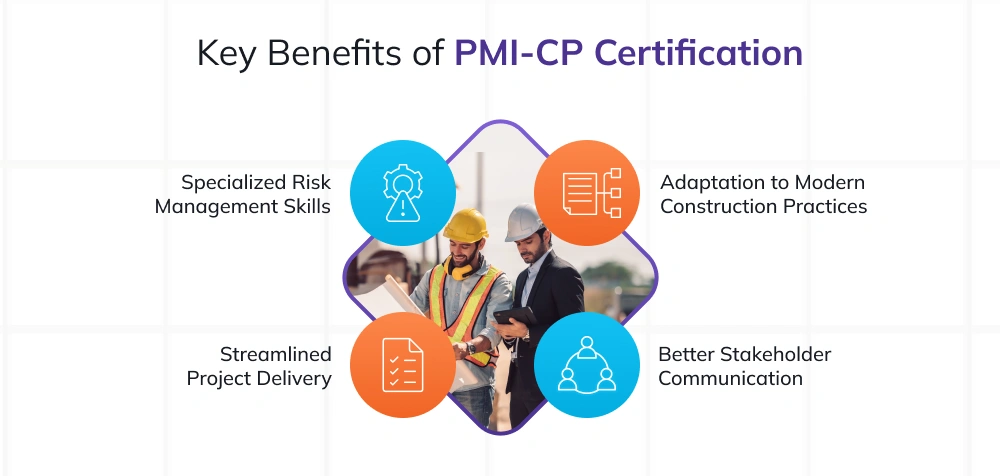
- Specialized Risk Management Skills: PMI-CP trains you to anticipate construction-specific risks like contractor delays, material shortages, and site conflicts, enabling proactive solutions.
- Streamlined Project Delivery: The certification emphasizes techniques that help optimize workflows, reduce bottlenecks, and improve overall project efficiency.
- Better Stakeholder Communication: You learn to effectively coordinate between owners, contractors, and consultants, reducing misunderstandings and improving collaboration.
- Adaptation to Modern Construction Practices: PMI-CP covers digital tools, lean construction, and integrated delivery methods, keeping you current with evolving industry trends.
|
“The new certification elevates the profession and transforms how organisations achieve project success on a broader scale. It underscores PMI’s commitment to empowering PMO leaders with the tools and knowledge they need to excel in their roles and drive meaningful change in their organisations.”
George Asamani MD PMI Sub-Saharan Africa Source |

|
PMI-CP is highly specialized, which can limit flexibility if you later want to move into broader project management roles outside construction.
Understanding PMP: The Global Project Leadership Credential
On the other hand, the PMP (Project Management Professional) certification, offered by the Project Management Institute (PMI), is globally recognized as a benchmark for project management excellence. PMP equips professionals to lead projects across various industries, including construction, IT, healthcare, and finance. It emphasizes a comprehensive understanding of project management principles, methodologies, and best practices.
When it comes to who should pursue it, PMP is ideal for experienced project managers, team leads, and professionals aspiring to transition into leadership roles. While PMI doesn't mandate specific prerequisites, candidates are expected to have substantial project management experience and formal education. Typically, a background in business administration, engineering, or a related field is advantageous.
Core Topics Covered
| Domain | Weightage (% of Exam) | No. of Tasks | Key Focus Areas |
|---|---|---|---|
| People | 42% | 14 | Leadership, team building, conflict management, stakeholder engagement, motivation, collaboration, mentoring |
| Process | 50% | 17 | Planning, executing, risk management, scope, schedule, cost, quality, procurement, change, governance, closing |
| Business Environment | 8% | 4 | Compliance, benefits realization, external environment impact, and organizational change |
Exam Structure
| Aspect | Details |
|---|---|
| Format | Computer-based exam delivered at Pearson VUE test centers or online proctored |
| Duration | 230 minutes (3 hours and 50 minutes), including two 10-minute breaks |
| Question Type | Multiple-choice, multiple responses, matching, hotspot, and limited fill-in-the-blank |
| Passing Score | PMI does not disclose a fixed passing score; candidates receive performance ratings in each domain |
Key Benefits of PMP Certification
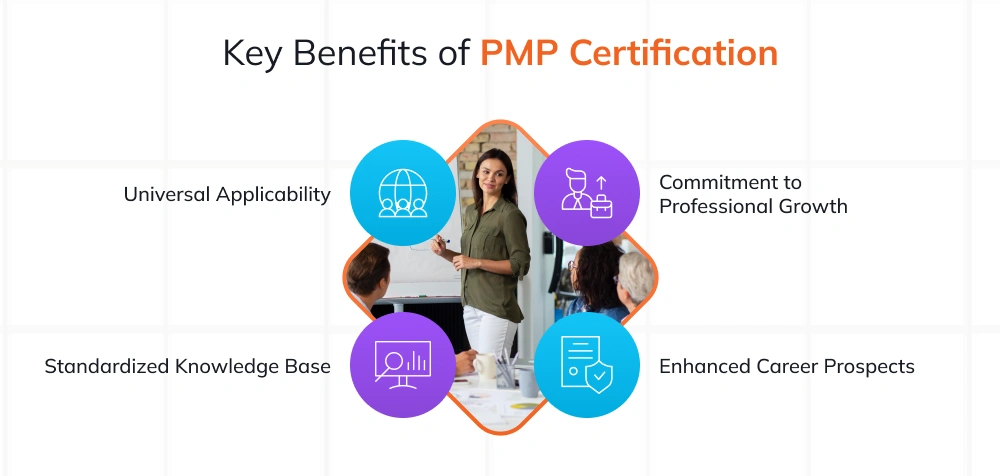
- Universal Applicability: PMP certification is recognized across industries and geographies, enhancing career mobility.
- Standardized Knowledge Base: Provides a common language and framework for project management, facilitating collaboration.
- Enhanced Career Prospects: PMP-certified professionals often have access to higher-paying roles and leadership positions.
- Commitment to Professional Growth: Pursuing and maintaining PMP certification demonstrates a dedication to continuous learning and professional development.
| Note: The PMP certification requires a significant investment of time and effort for preparation, which may be challenging for professionals with demanding schedules. |
Comparing PMI-CP vs PMP: Which Certification Is Right For You?
| Aspect | PMI-CP | PMP |
|---|---|---|
| Role | Construction manager, site engineer, supervisor | Experienced project manager overseeing multiple projects or programs |
| Focus Area | On-site coordination, contract management, and construction-specific risks | Strategic planning, stakeholder management, and organizational impact |
| Skill Enhancement | Scheduling, budgeting, safety compliance, and digital construction tools | Leadership, cross-industry project management frameworks, and program oversight |
| Career Path | Staying within construction and strengthening project-level credibility | Broad career mobility across industries, global recognition |
| Professional Goal | Technical excellence and project execution confidence | Strategic influence and leadership opportunities |
| Decision-Making Level | Tactical decisions at the project/site level | High-level decisions affecting multiple projects or programs |
| Industry Recognition | Primarily valued in construction-heavy markets | Widely recognized across industries worldwide |
| Problem-Solving Lens | Construction delays, material logistics, and safety compliance | Resource allocation, stakeholder engagement, and inter-project dependencies |
| Tools & Techniques | Construction software, digital modeling, field analytics | Project management information systems, enterprise-level reporting tools |
| Long-Term Flexibility | Best if staying in construction | Best if seeking mobility across sectors or strategic leadership roles |
How to Decide: A Practical Decision Framework
Choosing between PMI-CP and PMP certification can be confusing, especially when both can boost your career and reputation. The good news is, with a clear framework and a few practical tools, construction professionals can figure out which certification truly fits their experience, goals, and future plans.
Step 1: Assess Your Current Role
Take a close look at where you are today. Are you a site coordinator managing day-to-day operations, a project lead overseeing multiple teams, or a director shaping strategy across projects? Your current responsibilities can indicate which certification will give the most immediate value.
| Tip: List out the tasks you handle most often. This makes the alignment clearer. |
Step 2: Evaluate Your Experience and Education
PMI-CP leans toward professionals with hands-on construction experience, while PMP favors those with broader project management experience across projects and industries. Check your years of experience, educational background, and familiarity with project management frameworks.
Step 3: Define Your Long-Term Career Goals
Do you want to stay focused on construction sites, or are you aiming for senior leadership roles across industries? Knowing your destination helps determine which credential will get you there faster.
Step 4: Consider Your Preferred Industry Scope
PMI-CP is construction-specific, ideal if you plan to deepen expertise in building projects. PMP offers versatility, giving you the flexibility to work across industries.
Step 5: Match Certification Benefits to Your Needs
Look at what each certification offers: technical mastery, risk management, leadership, or global recognition, and match it to the skills and credibility you need.
| Tip: Use a simple checklist or flowchart: jot down your role, goals, and priorities, then see which certification ticks the most boxes. |
Preparing for the Exam: Study Strategies and Resources
1. Recommended Study Schedules
Determine whether daily short sessions (1–2 hours) or weekly intensive blocks are more suitable for your routine. Consistency matters more than intensity. Regular engagement helps reinforce concepts and keeps you on track without feeling overwhelmed.
2. Key Books and Online Courses
For PMI-CP, focus on construction project management guides, scenario-based exercises, and materials that cover scheduling, contracts, risk, and safety practices. For the PMP, comprehensive books such as the PMBOK Guide and PMI-endorsed online courses are essential. Select materials that align with your learning style, choose books for in-depth exploration, and opt for courses that provide guided learning.
3. Practice Tests, Forums, and Mentorship
Use practice exams to identify weak areas and simulate real test conditions. Engage in online forums to discuss tricky scenarios and gain insights from peers. Mentorship from certified professionals offers real-world context, valuable tips, and motivational guidance.
Career Opportunities After Certification
Earning a PMI-CP or PMP opens doors to various career paths, each aligned with your experience, focus, and long-term goals. While both credentials boost credibility and career growth, the opportunities differ based on the certification type.
PMI-CP Career Roles
| Role | Typical Responsibilities |
|---|---|
| Assistant Project Manager | Supports project planning, monitors site progress |
| Site Supervisor | Oversees daily site operations and team performance |
| Safety Coordinator | Ensures compliance with safety regulations and protocols |
| Compliance Officer | Monitors adherence to contracts, codes, and regulations |
PMP Career Roles
| Role | Typical Responsibilities |
|---|---|
| Senior Project Manager | Leads large-scale projects, manages multiple teams |
| Program Director | Oversees multiple projects, ensures strategic alignment |
| Portfolio Manager | Manages project portfolios, prioritizes resources |
| Construction Consultant | Advises organizations on project delivery strategies |
Conclusion
Both PMI-CP and PMP certifications offer significant value, but they cater to different career profiles. PMI-CP is ideal for construction professionals focused on site-level leadership, project execution, and compliance, while PMP suits those aiming for broader project management, strategic roles, and cross-industry opportunities.
The key is to align your choice with your experience, career goals, and the evolving demands of the construction industry, including emerging technologies and integrated project delivery methods. Whichever path you choose, commit to continuous learning, skill enhancement, and professional growth.
When it comes to certifications like PMI-CP or PMP, it’s always a good idea to reach out to professional training providers.
Frequently Asked Questions
Yes. Many professionals start with PMI-CP to gain construction-specific expertise and later pursue PMP for broader project management roles. Your prior experience will help accelerate the PMP path.
PMI-CP is highly valued for hands-on construction project roles, while PMP has broader global recognition and suits leadership positions across industries.
Both certifications require ongoing professional development. Typically, you must earn PDUs (Professional Development Units) and renew every 3 years.
The PMP (Project Management Professional) certification is a globally recognized credential that validates comprehensive knowledge of project management across various industries. It covers processes, methodologies, and leadership skills needed for managing projects of any type. On the other hand, the PMI-CP (Construction Professional in Built Environment Projects) certification is industry-specific, focusing solely on the construction sector. It emphasizes managing contracts, risks, and stakeholders in construction projects, making it more specialized than the PMP.
Yes, in most cases, PMI-CP is easier than PMP because it is targeted at professionals in construction and focuses on domain-specific knowledge. PMP, however, requires mastering a much broader project management framework that applies across industries, and the exam is known for its comprehensive coverage. Candidates with construction experience usually find PMI-CP more approachable, while PMP demands deeper preparation and understanding of diverse project scenarios.
The PMI-ACP (Agile Certified Practitioner) and PMP differ in focus and difficulty depending on your background. PMI-ACP is centered around Agile practices such as Scrum, Kanban, and Lean, and may feel challenging if you don’t have real-world Agile experience. PMP, however, is often viewed as harder overall because it requires extensive preparation across predictive, agile, and hybrid approaches to project management. In short, PMI-ACP is a niche and agile-focused certification, while PMP is broader.